


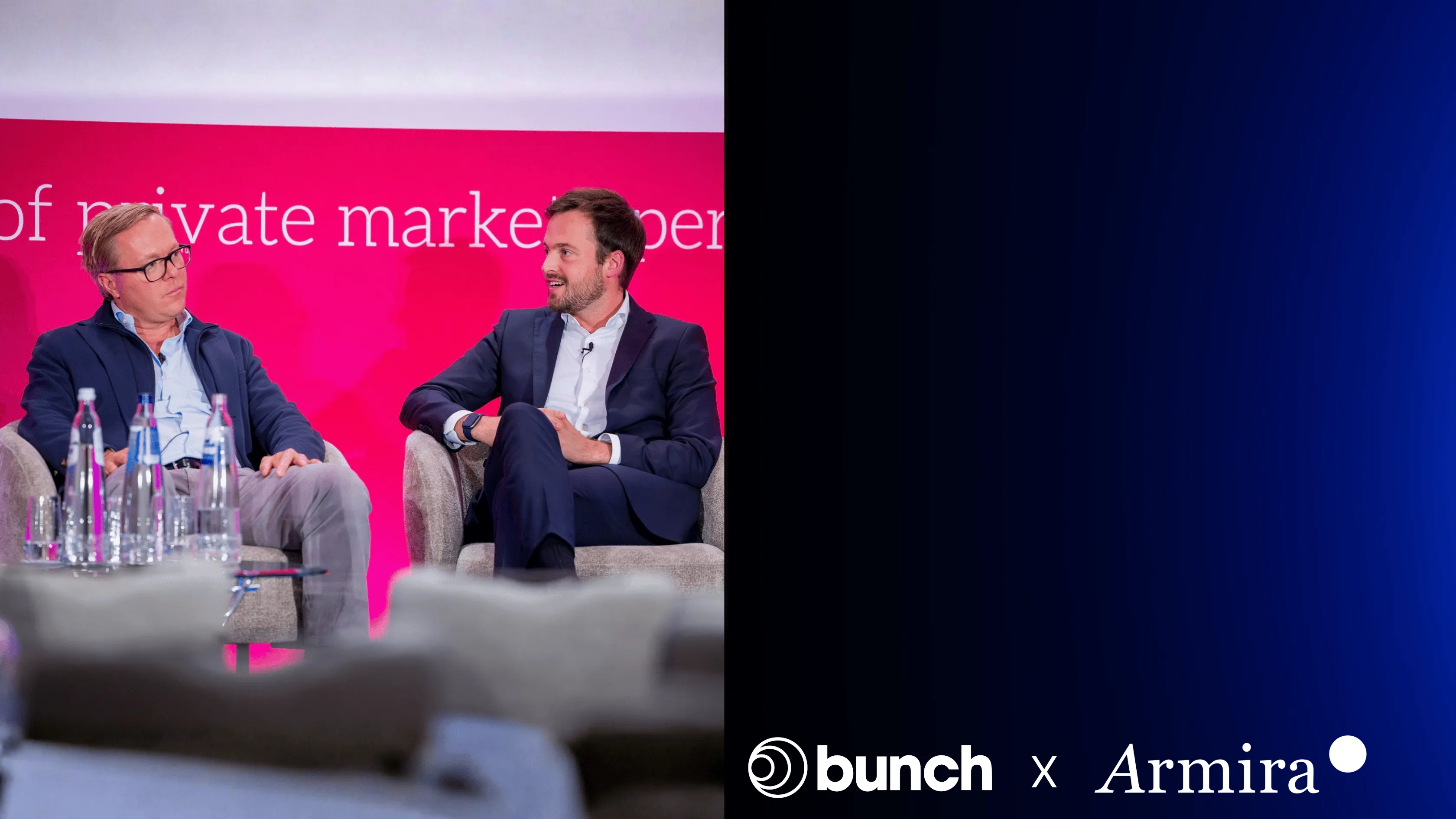
Fresh off SuperReturn CFO/COO in Amsterdam, it’s evident that private markets are evolving faster than most firms can keep up. The model that got us here has reached its limits, and it’s time to build what comes next.
I joined Björn Förster from Armira and Mike Dutton from eGateway Capital for the panel From Fund Admin to Fund Intelligence: Scaling the Next Generation of Private Market Platforms. One takeaway was clear. Scale now comes from connected data and automation that deliver real results. The firms that get this right manage to fix the chaos before they scale. Structure first, automation second.
Why the traditional fund admin model is breaking
The current fund admin model no longer scales. Private markets have grown rapidly, but that growth hasn’t translated into operating leverage. Margins still lag behind AUM, and while revenues have rebounded, efficiency hasn’t.
Many firms tried to keep up by adding people and point tools across vehicles and channels. The result is sprawl, not scale. Instead of rewiring core processes, they’ve built layers that make change harder.
Outsourcing has become the default response. 72% of firms have outsourced custody and settlement in the back office, and 35% have outsourced IT infrastructure in the middle office. Most cite cost reduction as the main driver — 59%, according to recent data — but that’s only part of the story. Outsourcing buys relief, not resilience.
One CFO of a multi-billion-dollar platform told me, “My team spends more time explaining what happened last quarter than planning for the next one.” The model has become reactive, growing costs faster than capabilities.
Firms now face a choice. Waiting means living with rigid systems and fragmented data that slow you down just as investors expect speed. Leading means investing in infrastructure that automates from the ground up — foundations built for cleaner data, faster insight, and a genuine competitive edge.
Both paths cost. Only one compounds value.
The readiness gap
Most firms aren’t ready for the next phase of scale. Their infrastructure and data remain too fragmented to support automation, leaving critical processes stuck in manual cycles.
Over time, these inefficiencies start to feel normal, reinforced by regulations that make change harder. The result is an operating model that spends more time maintaining itself than improving, while managers continue to underestimate the real cost in lost time and accuracy.
Firms began with fragmented solutions that solved immediate problems. That approach worked early on, but growth exposed the gaps. Now scale depends on connecting technology, service, and data across the fund lifecycle. That connection starts with structured data that runs the books and records and enables automation to handle the routine, so experts can focus on decisions that drive performance.
As Björn Förster put it, that setup got firms this far, but it won’t support the next doubling in AUM. He’s clear on what fund admin should deliver: reliable handling of financial data and reporting that flows cleanly from portfolio to fund to investors. What doesn’t belong are tools for investor relations or capital formation. CRMs and deal-sourcing platforms, like Affinity, serve a different purpose, and forcing them into fund admin only adds friction where precision matters most..
The three questions CFOs should be asking themselves
1. How much of your fund runs on a single source of truth?
Every firm operates across strategies, structures, and jurisdictions — but how much of that actually runs on one system? You don’t need the exact number to know it’s too low. That’s the first place to build leverage.
2. What can I decommission?
AI is exposing how many workflows exist just to hold old systems together. Most firms run too many tools that add complexity without value. Simplifying is the fastest path to resilience.
3. What partnerships will help me expand intelligently?
No firm scales alone. The right partners — in distribution, new markets, or origination — can accelerate access and opportunity while you modernise from within.
What "fund intelligence" actually means
Fund intelligence isn’t about automating the back office. It’s the operational shift from reactive to predictive — from explaining what happened to anticipating what’s next.
At its core, it’s an operating system for private markets: a normalised and standardised data model, automated back- and middle-office workflows, and expert override where it matters.
The real change happens in how firms work:
- From explaining to anticipating. Helping LPs plan for upcoming drawdowns instead of explaining errors in the last one..
- From sprawl to unity. Normalised data and automated workflows replace scattered point tools across vehicles and wrappers.
- From visibility to action. Automation drives tangible outcomes — faster closings, shorter reconciliation cycles, cleaner audits — instead of static dashboards.
As Björn Förster put it during our discussion, fund intelligence means focusing on decisions, not administration. Technology should work quietly in the background so that outcomes speak for themselves. It’s about doing more with less friction.
Where the AI opportunity actually lives
The biggest opportunities for AI in private markets aren’t glamorous. They’re specific, measurable, and buried in the day-to-day.
In the next 12 to 24 months, AI will accelerate progress across fund administration, from ledgers to LP communications and taxes. But technology on its own won’t solve the problem. Without clean data and connected systems, AI only magnifies the chaos. Real progress comes from investing in cleaning the existing data infrastructure, addressing the tech debt and making automation reliable and repeatable.
Progress here isn’t about adding another tool. As Björn Förster reminded us, one additional system doesn’t create more value. It’s about automating the work that currently drowns teams, freeing them to focus on strategic decisions instead.
The momentum is real
The energy at SuperReturn CFO/COO was palpable. It wasn’t theory; it was decision-making in real time.
The momentum reflects a real shift in how firms operate. Fund administration is moving away from manual coordination toward integrated systems that create transparency and control. The firms leading that change are turning what was once a cost centre into an engine for insight and speed.
We’re now at a crossroads, and the next phase of private markets will belong to those who act with intent. The shift is happening, and the only question is how fast you choose to move.
The best already build on bunch





















.webp)
